Flexible Shafting / Flex-LineN-FLEX
![[Translate to English:]](/fileadmin/_processed_/5/9/csm_N-FLEX_D170_f4174a516c.png "[Translate to English:]")
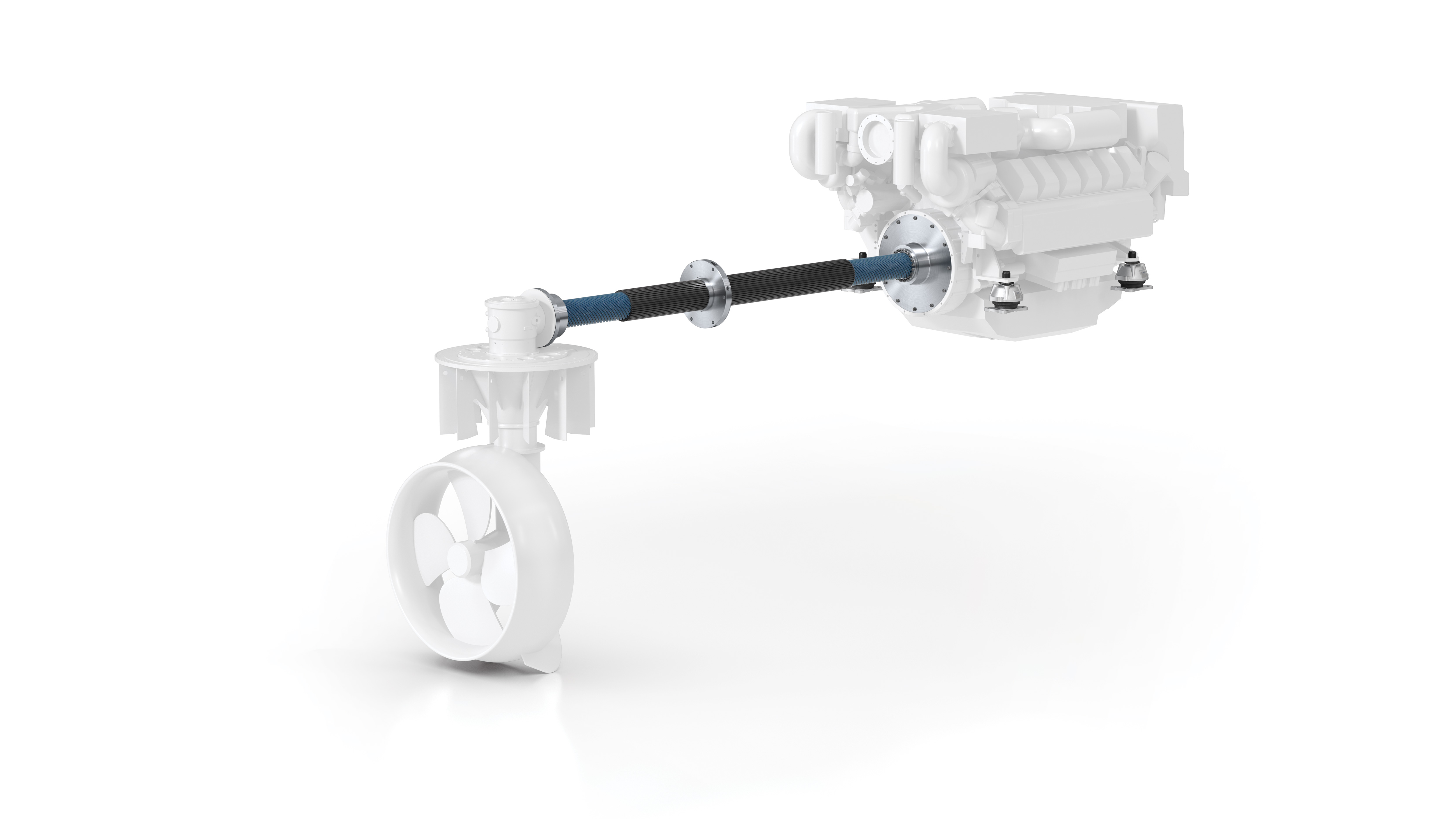
The new N-Flex® drive shaft is based on the patented NEMOS technology featuring a design consisting of fiber-reinforced composite and elastomer material. It offers a unique combination of torsional elasticity and high displacement capacity in one single component. The N-Flex® combines the functions of elastic couplings and drive shafts, reducing the number of components and mass of the driveline.
Technology: Unidirectional glass fibers are arranged in two layers of composite coils, transmitting the torque of the drive train. The outer set of coils is purely tension-loaded while the inner coils are compression-loaded, resulting in radial and axial equilibrium of forces. The composite coils of each layer are decoupled by gaps, the outer and inner layer are decoupled by high-performance elastomer material. This allows the coils to remain bending compliant which enables the entire shaft to be flexible in multiple directions.
Additionally, the decoupling induces a virtually unidirectional transmission of the torque through the composite coils which means that high strains can be applied resulting in an excellent torsional elasticity of the N-Flex® drive shaft.
Get in touch to find out how N‑Flex drive shafts can be implemented and improve your application.
Specifications
- Length: up to 3,5 m
- Angular displacement: up to 2° per flexible section
- Radial displacement: up to 20 mm/m
- Axial displacement: 1% of flex-length
- Operational temperature: 5 – 55 °C
- Acoustic damping: 70 – 100x higher than steel shaft
Benefits
- High torsional elasticity
- High flexibility in axial, radial, and angular direction
- Maintenance free
- Good structure-borne noise isolation
- Weight reduction up to 50%
- Low reaction forces
- Corrosion resistant
- Long unsupported shafts
- Customized design possible
Technical Data
- Torque Range TKN [kNm]1.75 kNm - 20.00 kNm
Application
Marine Applications, Industrial Applications
Downloads

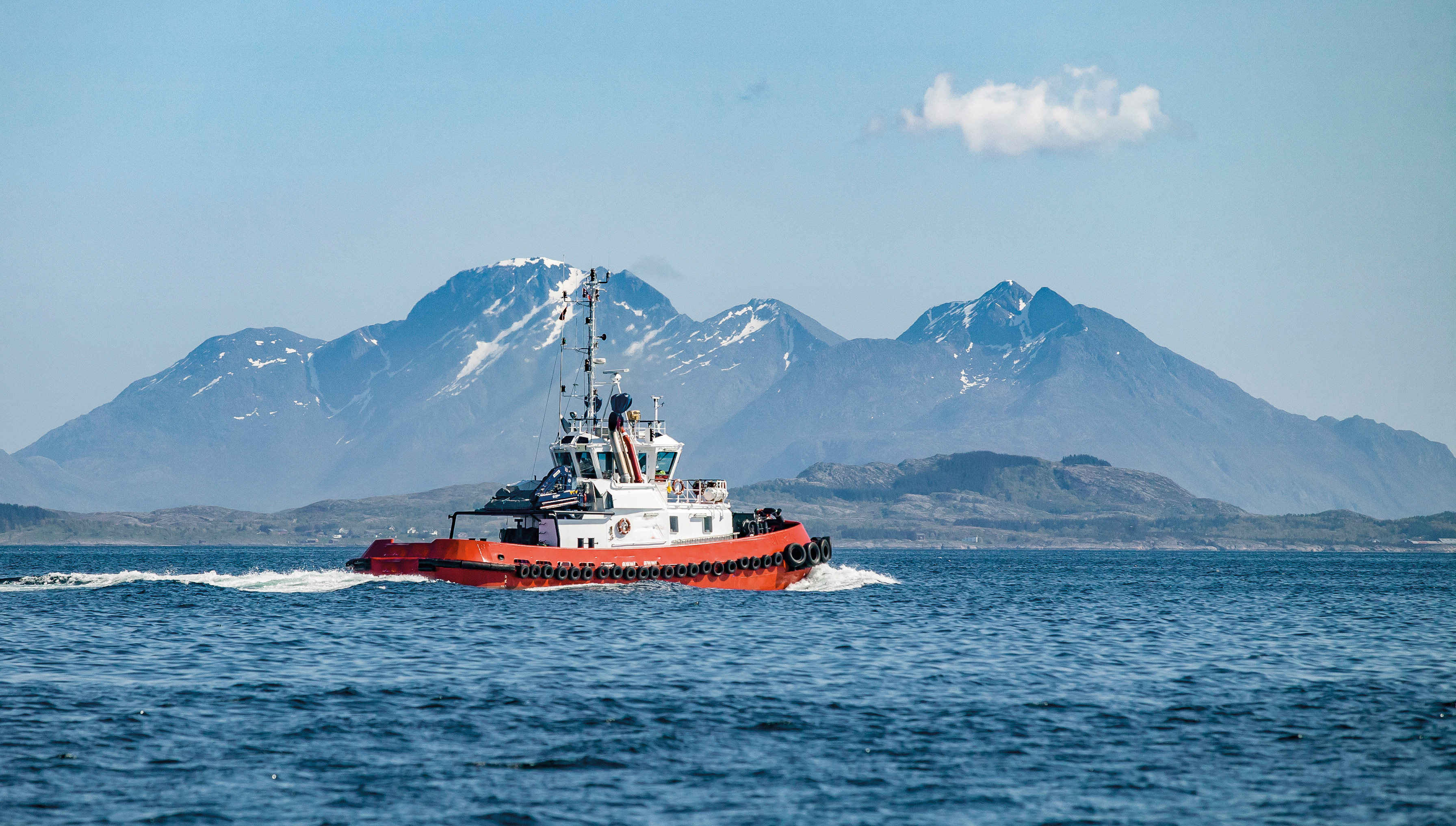
In order to achieve good maneuverability, tugboats are mostly fitted with steering propellers. There are various steering propeller systems on the market such as steering propellers in Z configuration or vertically-arranged steering propellers. What these drive systems have in common is that the engine power and motor speed may be transmitted over a distance of several meters from the motor to the rudder-propeller’s gearbox.